Copenhagen's Beloved Little Mermaid
哥本哈根的小美人鱼
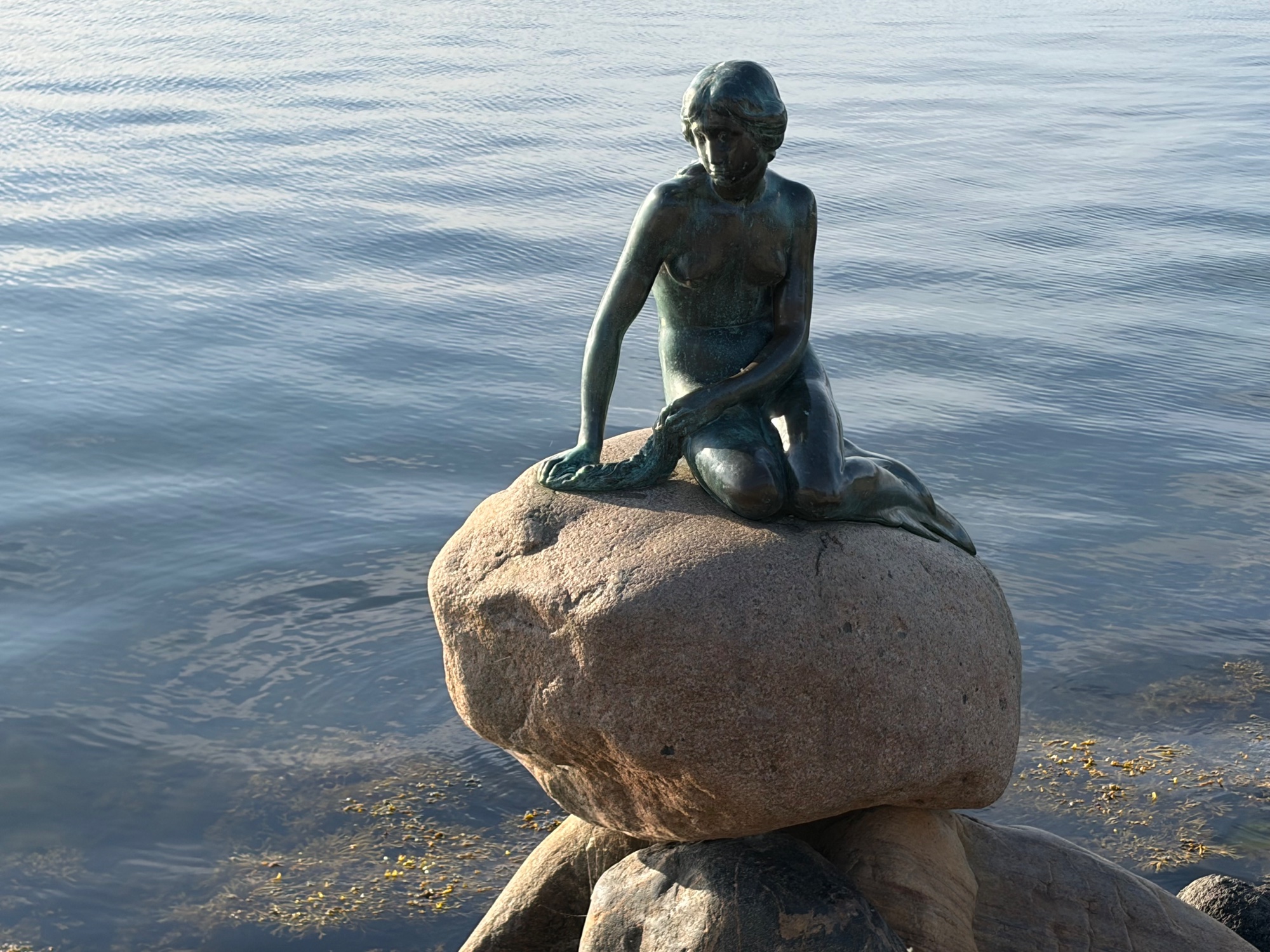
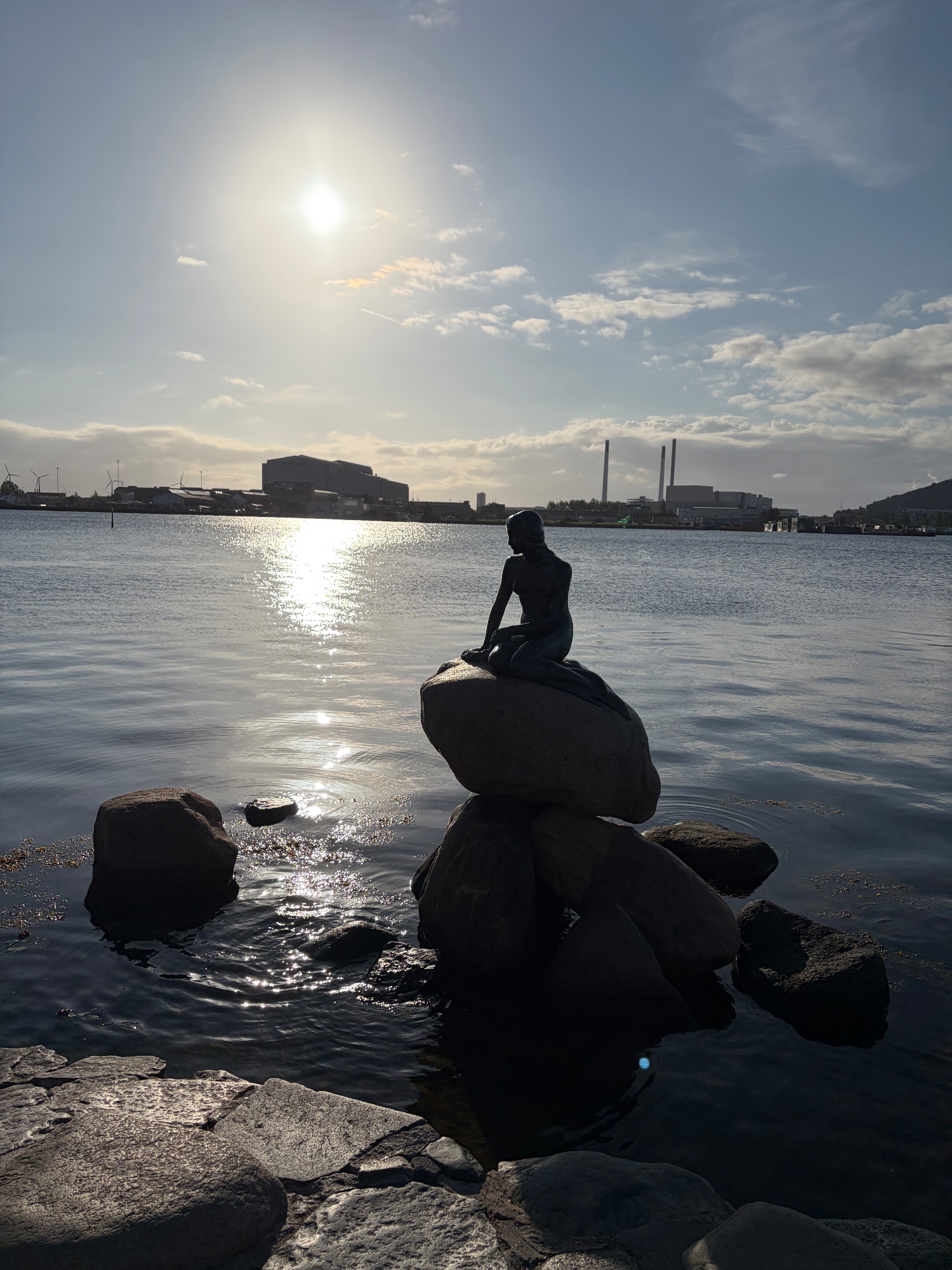
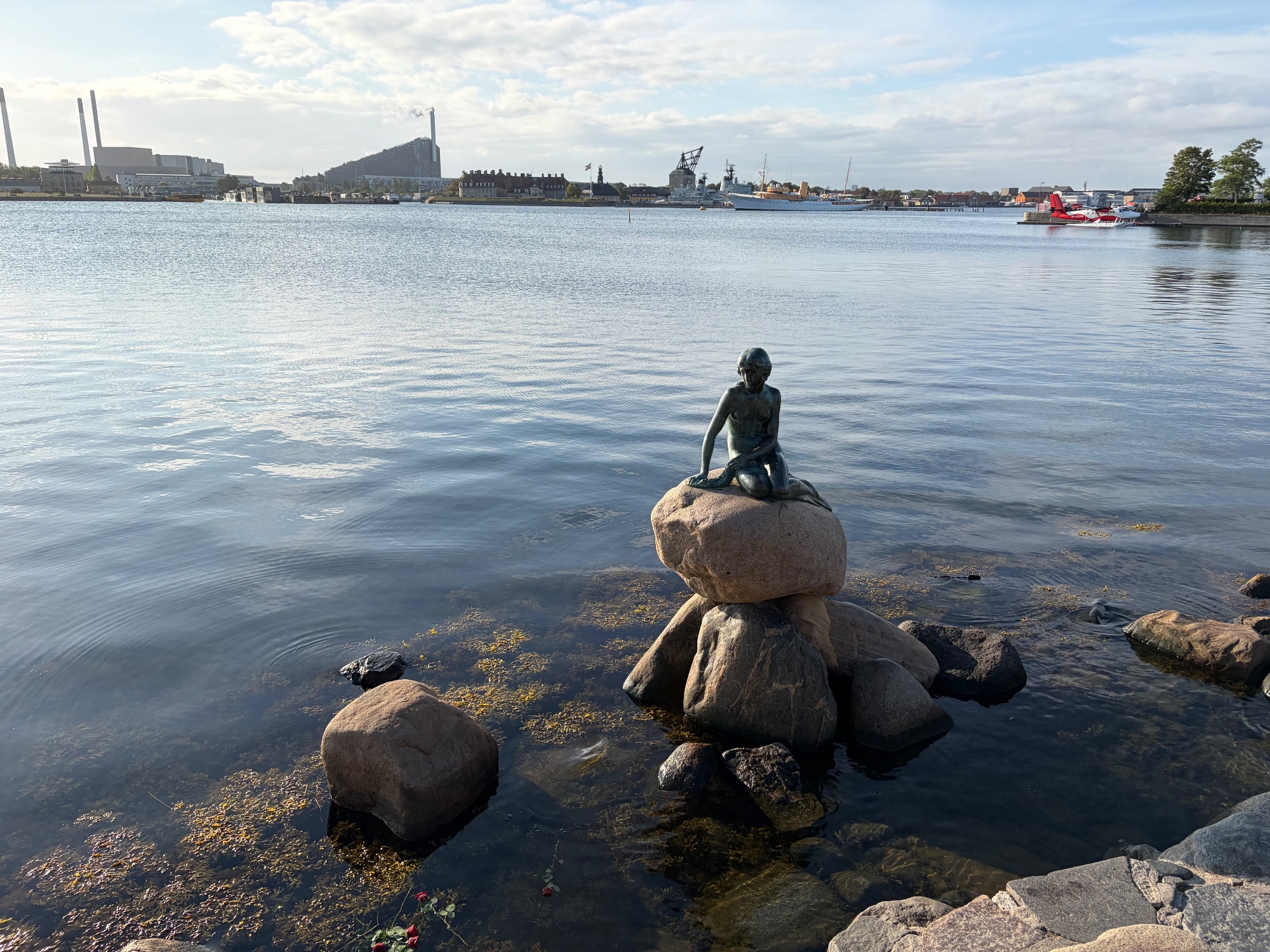
Early in the morning, I walked five kilometers from my place to the shore of the Baltic Sea, stepped into the crisp morning breeze, and stood beside the famous Little Mermaid sculpture.
The statue was inspired by Hans Christian Andersen's 1837 fairy tale "The Little Mermaid."
Back in 1909, Carl Jacobsen — son of the Carlsberg brewery founder, and a passionate art lover and philanthropist — was deeply moved after watching a ballet adaptation of Andersen's tale at the Royal Theatre in Copenhagen. The lead role was performed by ballerina Ellen Price, and Jacobsen was so impressed that he commissioned a sculptor to create a mermaid statue as a gift to the city of Copenhagen, with Price herself as the model.
The sculpture captures the mermaid mid-transformation from sea creature to human — her legs and fish tail still partially merged — her expression serene, touched with a quiet melancholy, her gaze fixed on the sea.
I arrived early and met a young woman from Japan near the statue. We helped each other take photos. When I left, she was sitting on the rocks, lost in thought, as if she couldn't quite bring herself to go.
The Little Mermaid is a symbol of Copenhagen — and of Denmark as a whole — a reflection of the Danish people's deep appreciation for literature, art, and the sea.
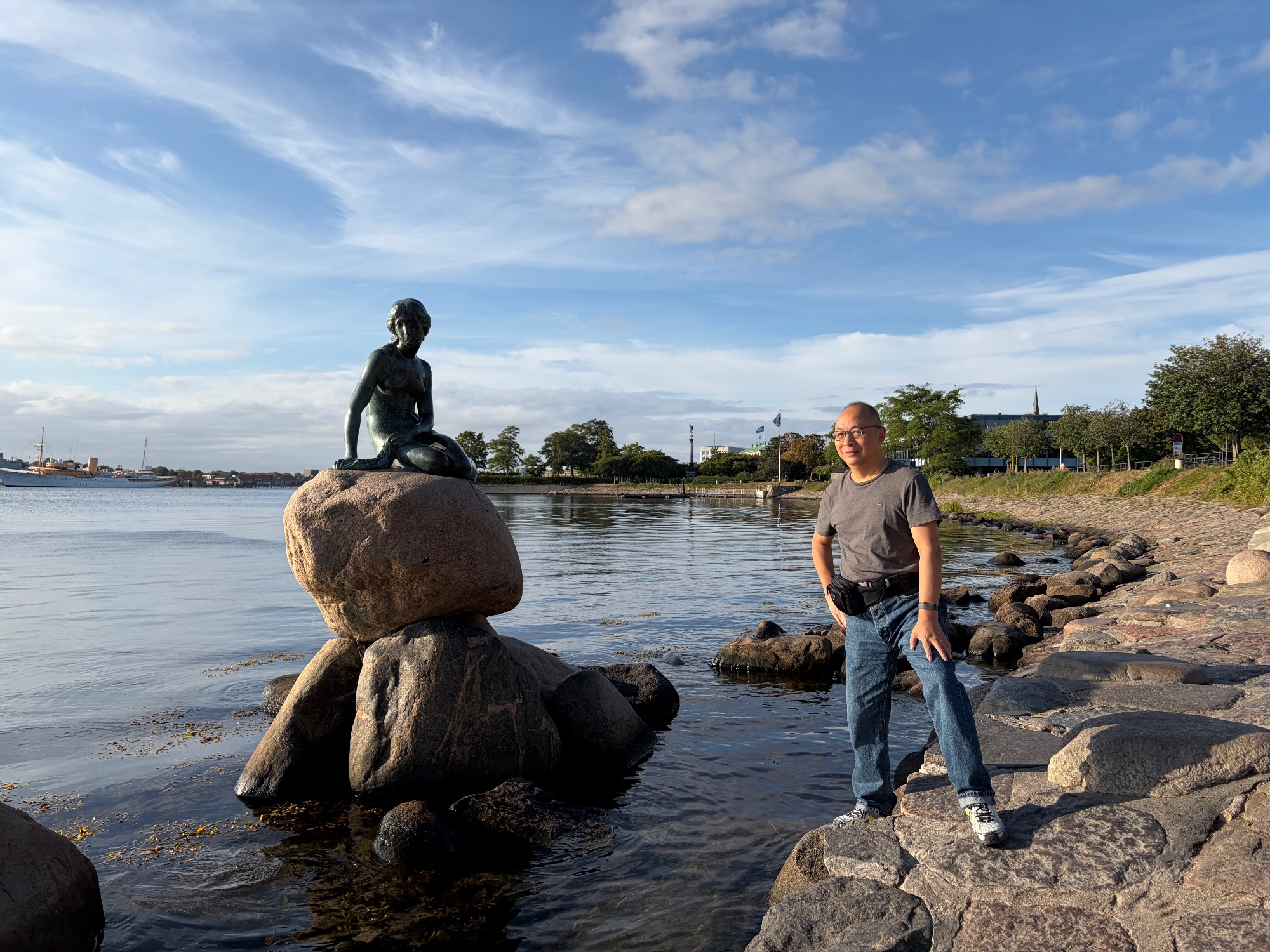
清晨,我从住处徒步五公里,来到波罗的海岸边,迎着清冽的晨风,站在了著名的《小美人鱼》雕塑旁。
这尊塑像的灵感来自安徒生1837年发表的童话《海的女儿》。
1909年,嘉士伯啤酒公司创始人之子、艺术爱好者与慈善家卡尔·雅各布森在哥本哈根皇家剧院观看了根据安徒生童话改编的芭蕾舞剧后深受感动。剧中女主角由芭蕾舞演员艾伦·普莱斯出演,雅各布森对其表演印象深刻,决定出资委托雕塑家创作一尊美人鱼雕像,作为礼物赠予哥本哈根市,普莱斯本人便是这尊塑像的模特。
雕塑定格的是美人鱼向人类形态转变的瞬间——腿与鱼尾尚未完全分离——神情宁静,略带忧郁,目光凝望着远方的大海。
我到得很早,在雕塑旁遇见了一位来自日本的姑娘,我们互相帮对方拍了照。离开时,她一个人坐在岩石上,若有所思,久久不愿离去。
《小美人鱼》是哥本哈根乃至整个丹麦的象征,承载着丹麦人对文学、艺术与海洋文化的深厚情感。
Comments 评论
No comments yet · 还没有评论